
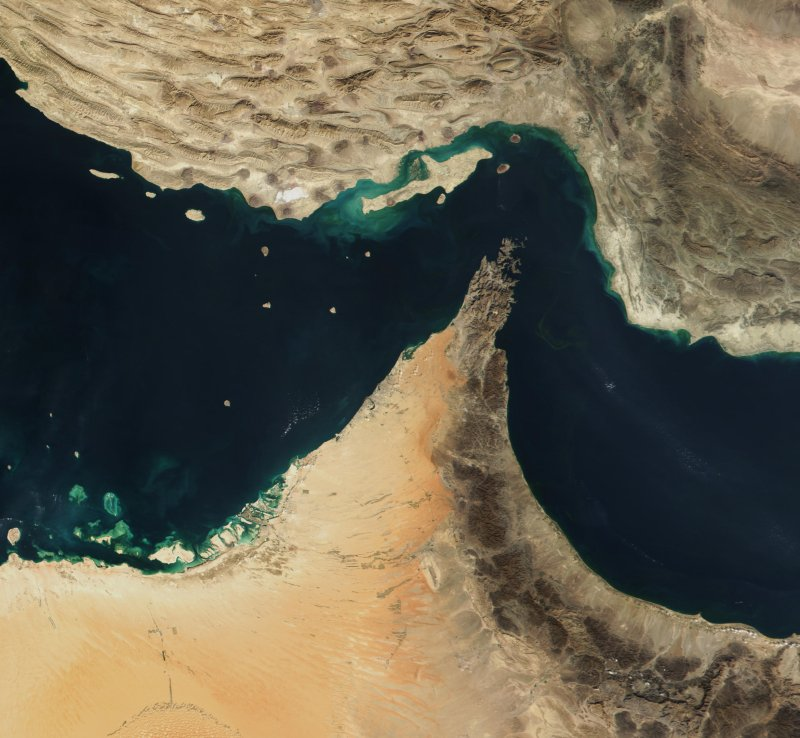
The tension in the Middle East has already begun to translate into concrete decisions in international maritime transport. In recent hours, various shipping lines reaffirmed that the safety of their crews and operations remains their top priority and, as a preventative measure, have suspended all new bookings to the Middle East until further notice.
This slowdown does not imply a complete halt to trade, but it does mark a change in the landscape: more controls, more planning, and a logistics chain once again operating under a risk-based approach. In this context, operators recommend coordinating cargo shipments as far in advance as possible, as new measures could be announced depending on how the conflict evolves.
The freight forwarding sector warns that the impact is not limited to the affected region. Gustavo Wilde, head of Interandes Shipping, explains that “to date, we are already seeing several problems due to the situation, such as potential closures in the Strait of Hormuz, which are forcing shipping lines to adjust services, in addition to the attacks in the Red Sea.” The result, he points out, is a combination of factors that impact costs, time, and space availability.
Among the immediate consequences, Wilde lists four main effects: “longer transit times; the possibility that more than one shipment could be spoiled; the application of ‘war risk’ surcharges that considerably increase the cost per container; the reshuffling of reservations due to congestion at transshipment ports; and the increase in raw material costs, because transportation directly impacts the price of inputs.”
The key point, experts warn, is that the real effect doesn’t always begin with an official closure of a critical shipping lane. “The real impact doesn’t start with an official closure, but rather when the risk alters operational decisions,” Wilde summarizes. In fact, the mere possibility of disruptions at strategic points can generate rescheduling, diversions, and fleet adjustments that ultimately disrupt the overall timeline.
The companies assure that they continue to monitor the situation in coordination with authorities and suppliers, and that bookings to the Middle East will resume when security conditions allow. Meanwhile, the market is already readjusting.
“Global trade doesn’t stop: it reorganizes. And every adjustment has a cost,” concludes Wilde, in a phrase that encapsulates the current climate for importers and exporters: anticipation, real-time information, and logistical alternatives are becoming variables as crucial as freight costs.